Building an eCommerce brand looks simple from the outside, set up a website, list products, run ads, and start selling. But in reality, many brands struggle not because their products are bad, but because of the common ecommerce mistakes they avoid.
From weak product pages to poor shipping experiences, these mistakes silently hurt conversions, increase returns, and slow down growth. Drawing inspiration from industry-leading insights, here’s a well-rounded, practical guide to the most common eCommerce mistakes and how to avoid them smartly.
1. Not Clearly Understanding Your Target Audience
One of the biggest mistakes eCommerce businesses make is trying to sell to everyone. When your messaging, pricing, and product positioning are unclear, customers fail to connect. Many brands skip audience research and jump straight into selling, resulting in low engagement and high bounce rates.
How to avoid this:
- Define clear buyer personas
- Understand buying motivations and price sensitivity
- Tailor your messaging for Tier 2 & Tier 3 audiences if that’s your core market
2. Choosing the Wrong eCommerce Platform or Tech Stack
Your platform is the backbone of your store. Choosing a solution that doesn’t scale, lacks integrations, or creates operational friction can restrict growth. Common issues include limited payment options, poor inventory sync, or lack of automation.
How to avoid this:
- Choose platforms that support growth and integrations
- Ensure your tech stack supports payments, analytics, logistics, and marketing tools seamlessly
Also read: Performance Marketing for eCommerce in 2026
3. Weak Product Pages That Don’t Convert
Your product page is where decisions happen. Unfortunately, many brands treat it like a catalogue instead of a sales page.
a. Generic Product Descriptions
Copy-paste descriptions fail to explain why the product is worth buying.
Fix: Focus on benefits, usage scenarios, and real-life value instead of just features.
b. Poor Visual Content
Low-quality or stock images reduce trust and clarity.
Fix: Use high-quality images, multiple angles, and real product shots.
c. Missing Reviews and Social Proof
Customers trust other customers more than brands.
Fix: Collect and display reviews, ratings, and testimonials prominently.
4. Ignoring SEO From the Start
Many eCommerce brands rely heavily on ads and forget organic growth. Without SEO, you’re constantly paying for traffic.
Common mistakes include:
- Missing meta titles and descriptions
- No keyword-focused blogs
- Duplicate content across pages
How to avoid this:
- Optimise product and category pages
- Publish helpful blogs answering customer queries
- Use SEO-friendly URLs and image alt text
5. Complicated Checkout Experience
A long or confusing checkout process is one of the biggest reasons for cart abandonment. Forced account creation, too many form fields, or limited payment options push users away.
How to avoid this:
- Enable guest checkout
- Reduce checkout steps
- Offer multiple payment options including UPI, COD, wallets, and cards
6. Poor Mobile Shopping Experience
A majority of shoppers browse and purchase on mobile devices. If your site isn’t mobile-optimised, you’re losing sales.
How to avoid this:
- Use mobile-first design
- Ensure fast loading times
- Keep buttons, fonts, and navigation thumb-friendly
7. Weak Brand Identity and Messaging
Selling products without a clear brand story makes it easy to forget you and easy to replace you. Brands that fail to communicate their values, purpose, or uniqueness struggle with loyalty.
How to avoid this:
- Define your brand voice and story
- Maintain consistency across website, ads, and packaging
- Communicate what makes you different
8. Inconsistent or Random Content Strategy
Posting content without a plan leads to wasted effort and poor SEO results. Many brands either post too irregularly or create content that doesn’t solve customer problems.
How to avoid this:
- Create a content calendar
- Align blogs, emails, and social posts with customer journey stages
- Focus on educational and problem-solving content
9. Poor Website Navigation and User Experience
If users can’t easily find what they’re looking for, they leave. Cluttered menus, unclear categories, and slow-loading pages increase bounce rates.
How to avoid this:
- Keep navigation simple and logical
- Use clear categories and filters
- Optimise page speed and usability
10. Ignoring Data and Analytics
Running an eCommerce business without data is like driving blind. Many brands don’t track key metrics such as conversion rates, cart abandonment, or product performance.
How to avoid this:
- Use analytics tools to track user behaviour
- Monitor funnel drop-offs
- Use insights to improve pricing, content, and checkout
11. Limited or Inefficient Shipping Options
Shipping is no longer just an operational task — it plays a direct role in conversions, customer satisfaction, and repeat purchases. High delivery charges, delayed shipments, failed deliveries, or a lack of real-time tracking can quickly frustrate customers and increase cart abandonment.
Many eCommerce businesses lose customers simply because they rely on limited courier options or manual shipping processes that don’t scale with growth.
How to avoid this:
- Offer multiple courier and delivery options to match different customer needs
- Ensure transparent shipping costs with no last-minute surprises
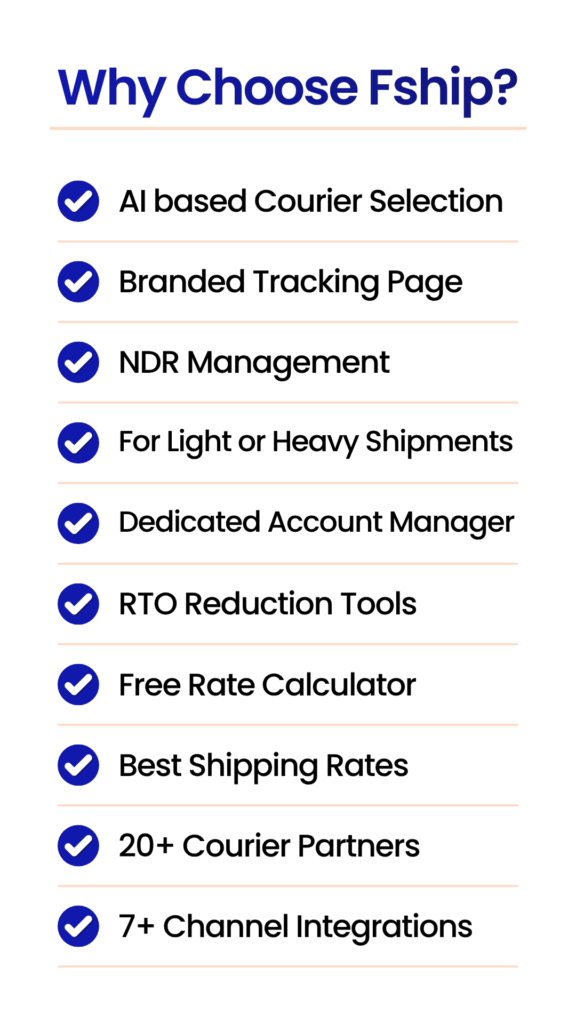
- Use a tech-enabled shipping platform like Fship to automate courier allocation, optimise delivery timelines, and manage returns efficiently
With an AI-powered system that works with multiple courier partners, platforms like Fship help businesses reduce delivery failures, improve turnaround times, and deliver a smoother post-checkout experience which ultimately drives better retention and trust.
12. Poor Customer Support and Post-Purchase Experience
The customer journey doesn’t end after checkout. Slow responses and poor support damage trust and retention.
How to avoid this:
- Provide quick and accessible support channels
- Keep customers informed with order updates
- Handle returns and issues professionally
Most eCommerce failures don’t happen overnight, they happen because small mistakes are ignored for too long. By fixing these common issues early, brands can improve conversions, reduce returns, and build long-term customer trust. Success in eCommerce isn’t about doing everything perfectly – it’s about avoiding the mistakes that hold you back and continuously optimizing every step of the customer journey.