You just ran a successful sale. Orders are flooding in 200, 500, maybe 1,000 in a single day. But instead of celebrating, your team is drowning. Manually copying tracking numbers. Picking couriers one by one. Printing labels. Calling courier helplines for delayed shipments. Sound familiar? This is the exact problem shipping automation solves.
If you’re a D2C founder, an eCommerce seller in India, or a growing brand, shipping automation isn’t a luxury anymore, it’s survival. In a market where customers expect next-day delivery and zero post-purchase confusion, doing logistics manually is like trying to win a Formula 1 race on a bicycle.
In this blog, we break down exactly what shipping automation is, why it matters for Indian sellers, and how Fship makes it seamless from the first order to the last mile.
What Is Shipping Automation?
Shipping automation is the use of software and AI to handle repetitive logistics tasks like courier selection, label generation, order tracking, and NDR management, automatically, without manual intervention at every step.
Instead of:
– Manually assigning couriers to each order
– Typing in shipping addresses one by one
– Downloading and printing labels from five different portals
– Chasing NDR management (Non-Delivery Reports) manually.
An automated shipping system does all of this for you, in real time, at scale.
At its core, E-Commerce shipping automation connects your order management systems like Shopify, WooCommerce, etc. with your courier network and automates every handoff intelligently, instantly, and accurately. This is what modern order fulfillment automation looks like.
Why Shipping Automation Matters for Indian eCommerce?
India’s eCommerce market is projected to reach $300 billion by 2030. D2C brands alone are expected to cross $61 billion by FY27, growing at nearly 38% CAGR. But rapid growth brings rapid complexity.
Here’s what’s making manual shipping unsustainable:
1. RTO Rates are vanishing your Profits
Return-to-Origin (RTO) rates in India sit at 20–35% for most eCommerce categories. Every failed delivery doesn’t just mean a lost sale, it means you pay for forward shipping, reverse pickup, and repackaging. For a brand shipping 10,000 orders a month, even a 10% RTO rate is a massive cash drain.
Reduceing RTO with automation particularly through AI courier selection and automated NDR management is one of the most proven levers available to Indian sellers today.
2. Customers Expect Real-Time Visibility
Today’s online shopper checks their tracking link multiple times. If they don’t get updates, you get support tickets, complaints, and worst cases are chargebacks. Real-time tracking with automated notifications via SMS, WhatsApp, and email, triggered at every shipment milestone, solves this entirely.
3. You Can’t Scale Manually
A 3-person ops team can handle 200 orders a day manually. Push that to 2,000 and the system collapses. Order fulfillment automation lets you 10x your order volume without 10x-ing your team.
4. Courier Performance Varies by Pin Code
In India, every pincode comes with their own challanges, and every courier have their own merits and demerits, eg: Delhivery might be great for Tier 1 cities whereas Shadowfax might outperform in Tier 2 and India Post covers pin codes no one else does. Without automated courier allocation in India, you’d never know which courier to use where and you’d spend hours figuring it out manually.
Also read: 25+ Home Business Ideas
Key Features of a Good Shipping Automation Platform
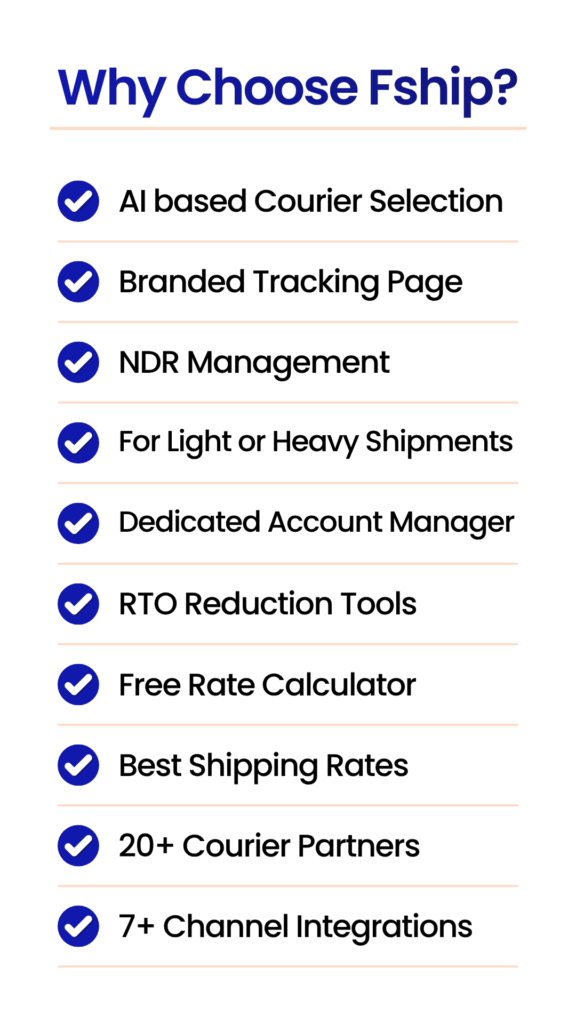
Not all eCommerce shipping automation tools are equal. Here’s what to look for and what Fship delivers:
AI Courier Allocation
The platform should automatically assign the best courier for every order based on pin code performance, delivery speed, cost, and your custom rules. Fship’s AI courier selection engine does exactly this, no manual decision-making required. This is automated courier allocation in India at its smartest.
Label Generation
Once an order comes in, the system should auto-generate a shipping label in seconds. No copy-pasting. No formatting. No portal-hopping. A key pillar of shipping automation for eCommerce.
Bulk Order Processing
Whether you’re shipping 50 orders or 5,000, a good platform handles them in one go. Fship’s Bulk Order Shipping and Fship Bulkit features are built specifically for high-volume sellers. Bulk order shipping in India during peak season becomes effortless.
NDR & RTO Automation
When a delivery attempt fails, the system should automatically trigger a follow-up via SMS, WhatsApp, or IVR to the customer. This closed-loop NDR management is one of the biggest drivers of delivery success and a direct way to reduce RTO with automation.
Real-Time Tracking Dashboard
All your shipments across all couriers in one dashboard. No tab-switching. No helpline calls. Just a clean real-time tracking view of every order’s status, powering true order fulfillment automation.
Branded Tracking Page
Instead of sending customers to a generic courier portal, Fship sends them to a white-labeled tracking page with your brand’s logo, colours, and even upsell banners. This is shipping automation extended all the way to the customer experience.
Multi-Channel Integration
Whether you’re selling on Shopify, WooCommerce, your own website, or across marketplaces. Your platform should pull in orders automatically. Shopify shipping automation in India via Fship’s multi-channel integrations and API means zero manual order imports, ever.
How Fship Automates Your Entire Shipping Workflow?
Here’s a step-by-step look at what eCommerce shipping automation looks like on Fship:
Step 1: Order comes in
Your customer places an order. Fship pulls it in automatically from your Shopify, WooCommerce, or any integrated store. Order fulfillment automation begins the moment a purchase is made.
Step 2: Custom validation
Fship’s Custom Validation feature checks the order against your rules address completeness, pin code serviceability, COD risk flags, product weight before anything else moves.
Step 3: AI picks the best courier
Fship’s AI courier selection engine automatically assigns the optimal courier from partners like Delhivery, Blue Dart, DTDC, Shadowfax, Ecom Express, Ekart, XpressBees, and India Post. This is automated courier allocation in India powered by real performance data.
Step 4: Label generated instantly
A shipping label is auto-generated and ready to print. Zero manual input.
Step 5: Shipment dispatched, customer notified
Once dispatched, your customer gets real-time tracking updates automatically. They land on your Branded Tracking Page not a generic courier portal.
Step 6: NDR triggered if delivery fails
If a delivery attempt fails, Fship’s automated NDR management workflow re-engages the customer and reattempts delivery turning failed shipments into successful ones.
Step 7: COD remittance tracked
For cash-on-delivery orders, all remittance is tracked and managed transparently. A critical part of shipping automation for dropshippers in India.
The entire flow from order to delivery runs on autopilot.
Conclusion
Shipping automation is no longer a feature reserved for big brands with big budgets. It’s the baseline for any eCommerce business that wants to grow sustainably in India.
Less manual work. Fewer errors. Lower RTO. Happier customers. That’s the compounding value of order fulfillment automation done right.
Fship is built to give every D2C seller/eCommerce brand access to this exact advantage with AI courier selection at the core, transparent pricing, automated NDR management, real-time tracking, and bulk order shipping built in from day one.
Want to automate shipping for your brand?
Sign up at Fship for Free, Register Now
FAQs
Ans: Shipping automation is the use of software to handle tasks like AI courier aggregator gives you access to multiple couriers in one place. Shipping automation goes further it intelligently selects, assigns, tracks, and manages those couriers automatically, turning a manual logistics process into a fully automated order fulfillment workflow.
Ans: Automated courier allocation in India analyses pin code-level delivery performance, cost, speed, and custom seller rules to automatically assign the best courier for every individual order, eliminating guesswork and reducing RTO.
Ans: Absolutely. eCommerce shipping automation via Fship is built for D2C founders, ecommerce store owners, and, not just enterprises. Even sellers shipping 50–100 orders per day see major time and cost savings.