For ecommerce sellers, choosing between cash on delivery (COD) and prepaid orders affects more than how customers pay. It can influence shipping costs, return-to-origin (RTO) expenses, delivery success and cash flow.
COD lets customers pay when their order arrives, while prepaid orders are paid for before dispatch. COD can appeal to customers who prefer paying on delivery. Prepaid orders give sellers payment confirmation earlier, although cancellations, failed deliveries and refunds can still affect the final outcome.
The right payment mix depends on your customers, product category, delivery performance and cost per successfully delivered order. Here’s how to compare both options and decide what works for your business.
COD vs Prepaid Orders: What Is the Difference?
COD and prepaid orders differ mainly in payment timing, collection costs and the risks sellers manage after an order is placed.
| Factor | COD Orders | Preapaid Orders |
| Payment timing | Customer pays at delivery | Customer pays before dispatch |
| Payment-related charges | May include a COD collection fee. | May include payment gateway charges |
| Cash flow | Payment arrives after successful delivery and courier remittance | Payment is collected earlier, subject to settlement |
| Customer preference | Useful for customers who prefer paying on delivery | Suitable for customers comfortable paying online |
| Delivery risk | Customer refusal or non-availability can lead to RTO | Delivery can still fail due to address issues, non-availability or other problems |
| Refund handling | Depends on whether payment was collected and the order’s status | Refunds may be required after payment has been collected |
Neither COD nor prepaid is automatically cheaper. Sellers need to compare payment charges, shipping expenses, delivery success and the cost of handling failed orders.
How Do COD and Prepaid Orders Affect RTO?
Return to origin (RTO) occurs when a shipment cannot be delivered to the customer and is returned to the seller. RTO can increase logistics costs and delay inventory from becoming available for another sale.
COD orders may be returned when customers change their minds, refuse delivery or are unavailable to receive the parcel. However, prepaid orders can also become RTO shipments because of incorrect addresses, delivery delays or repeated failed delivery attempts.
How can ecommerce sellers reduce RTO?
Sellers can reduce preventable delivery failures by improving the steps between order placement and final delivery.
- Confirm selected COD orders: Verify order details when the risk or order value justifies an additional confirmation step.
- Validate delivery information: Check address and contact details before dispatch to reduce avoidable delivery problems.
- Keep buyers informed: Send useful order and delivery updates so customers know when to expect their parcels.
- Act on non-delivery reports (NDRs): Review the reason for a failed delivery and coordinate the appropriate follow-up where possible.
- Track courier performance: Compare delivery success, RTO rates and delivery timelines across courier partners.
These actions can help sellers identify preventable failures. Their impact should be measured using actual shipment data rather than assumed in advance.
Which Is Cheaper: COD or Prepaid?
The cheaper payment method depends on the full cost of delivering an order successfully—not just the fee charged for collecting or processing payment.
Consider this hypothetical example for an order worth ₹1,000. These figures are illustrative only and are not actual Fship or courier rates.
| Cost component | COD order | Prepaid order |
| Forward shipping | ₹60 | ₹60 |
| Payment-related fee | ₹25 COD collection fee | ₹20 payment processing fee |
| Total initial shipping and payment cost | ₹85 | ₹80 |
In this example, the prepaid order costs ₹5 less before accounting for other expenses. That difference does not automatically make prepaid more profitable.
If an order fails delivery, the seller may also incur return shipping charges, packaging expenses, handling costs and delayed inventory turnover. The actual financial impact depends on the courier agreement and the reason for the failed delivery.
How should sellers calculate the cost per delivered order?
Use this formula:
Cost per delivered order = Total relevant shipping and payment costs ÷ Number of successfully delivered orders
For a more complete profitability calculation, include product cost, packaging, advertising, discounts, return-related expenses and other variable costs.
A payment method that appears cheaper per shipment may become more expensive when fewer orders are successfully delivered. Compare both methods using the same cost definitions and reporting period.
How Do COD and Prepaid Orders Affect Cash Flow?
Cash flow depends on when money is collected, when it becomes available and what expenses the seller must pay before receiving it.
Prepaid orders generally provide earlier payment collection, while COD proceeds are usually received after delivery and courier remittance. The exact timeline depends on payment gateway settlements, courier terms, refunds and other adjustments.
For example, consider 100 orders worth ₹1,000 each:
- 100 prepaid orders: ₹1,00,000 is collected before dispatch, subject to payment settlement, cancellations and refunds.
- 100 COD orders: ₹1,00,000 is the potential order value, but payment depends on successful delivery and subsequent remittance.
These amounts represent order value, not guaranteed profit or final revenue.
To understand the effect on cash flow, track:
- Average time between order placement and payment receipt.
- Delivered orders by payment method.
- RTO rate by payment method.
- Shipping and payment costs per delivered order.
- Refunds, cancellations and outstanding COD remittances.
- Contribution margin after variable costs.
This helps sellers understand whether a payment method is supporting healthy cash flow or creating additional costs and delays.
Should Ecommerce Sellers Encourage Prepaid Orders?
Encouraging prepaid orders can make sense when the total cost of acquiring and delivering a prepaid order is lower than the cost of a comparable COD order. However, pushing customers towards prepaid payments without considering conversion and profitability can backfire.
Sellers can test the following approaches:
- Offer a small prepaid discount: Compare the discount against the COD fee, payment processing charge and other costs saved. The incentive should make financial sense.
- Provide convenient payment options: Make checkout straightforward and display payment methods clearly.
- Communicate refund policies: Clear information about cancellations, refunds and delivery expectations can help customers make informed decisions.
- Review COD restrictions carefully: If COD creates repeated losses in specific situations, test targeted restrictions rather than removing it for every customer.
- Measure results before scaling: Compare conversion rate, prepaid share, RTO rate and profit per order before and after making changes.
The goal is not simply to increase prepaid orders. It is to improve the number of profitable orders that reach customers successfully.
How to Choose the Right COD and Prepaid Mix
There is no single COD-to-prepaid ratio that works for every ecommerce business. A suitable mix depends on customer preferences, product prices, delivery performance, margins and the costs associated with each payment method.
Use these steps to make a data-led decision:
- Compare delivery performance: Calculate delivery success and RTO rates separately for COD and prepaid orders.
- Calculate the full cost: Include forward shipping, return shipping, payment fees, discounts and relevant handling expenses.
- Measure profit per order: Compare the contribution from orders placed, not just the value of orders delivered.
- Identify high-risk patterns: Look for product categories, delivery locations or customer segments with repeated delivery failures.
- Test changes gradually: Experiment with prepaid incentives, COD confirmation or delivery communication and measure the results.
- Review cash flow: Check whether the payment mix supports your working-capital requirements and operating expenses.
Review these metrics regularly. A payment mix that works during one sales period may not perform the same way during a major sale, a change in customer demand or a shift in courier performance.
How Fship Helps Ecommerce Sellers Manage COD and Prepaid Orders
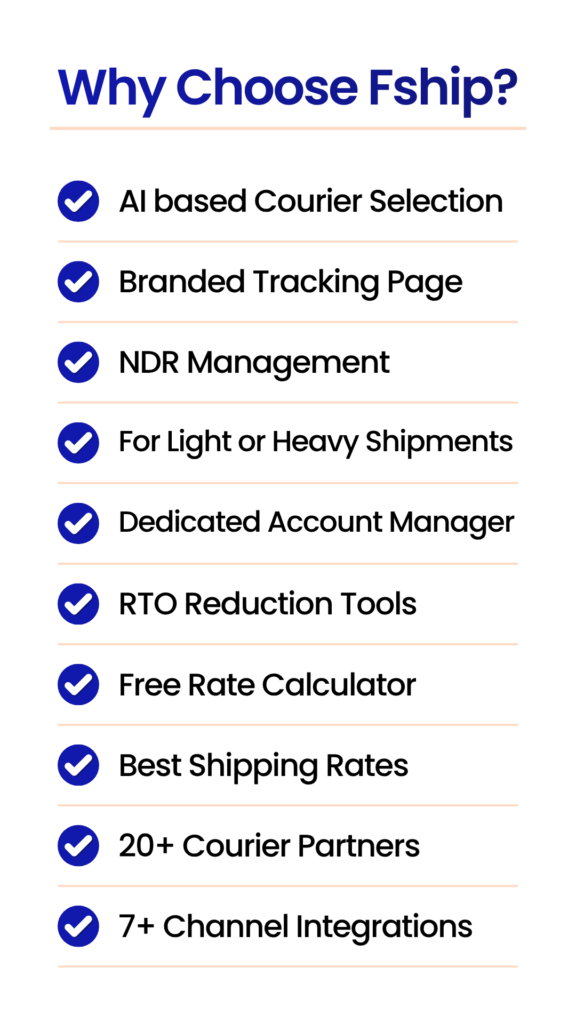
Managing COD and prepaid orders involves more than collecting payments. Sellers also need to coordinate shipments, communicate with buyers and respond when deliveries fail. Fship helps ecommerce sellers manage shipping operations, including buyer communication and non-delivery report (NDR) handling.
Manage shipping operations from one platform
As order volumes grow, coordinating shipments and courier workflows can become harder. Fship’s shipping automation capabilities help sellers manage shipping activities through a more organised workflow, reducing the need to handle every process separately.
Improve buyer communication
Customers who are unaware of delivery attempts may miss parcels or be unavailable when the courier arrives. Fship’s buyer communication capabilities can support order and delivery follow-ups, helping sellers keep customers informed throughout the shipping process.
Handle non-delivery reports (NDRs)
When a courier reports a failed delivery, sellers need to understand the reason and determine the next action. Fship’s NDR management capabilities help sellers manage delivery exceptions and coordinate follow-ups where appropriate.
Make better shipping decisions using order data
Sellers should compare delivery success, RTO rates, shipping costs and courier performance across COD and prepaid orders. Combining these figures with order and payment data can help identify where costs are rising and which parts of the delivery process need attention.
Fship supports shipping operations, but the best COD-to-prepaid mix should be determined using your own order, payment and delivery data.
Final Thoughts
COD and prepaid payments serve different customer preferences, and both can play a role in an ecommerce business. COD can help customers who prefer paying on delivery, while prepaid orders generally offer earlier payment collection.
The better approach is to understand the full cost of each payment method, reduce preventable delivery failures and measure profitability rather than focusing only on the percentage of prepaid orders.
With Fship’s shipping management, buyer communication and NDR capabilities, sellers can work towards better-coordinated delivery operations while using their own data to make informed payment and shipping decisions.

Frequently Asked Questions:
Is COD more expensive than prepaid?
COD can involve collection fees, and failed deliveries can add shipping and handling expenses. Prepaid orders may have payment processing charges and discounts. The cheaper option depends on the total cost per successfully delivered order.
Do prepaid orders have a lower RTO rate?
Prepaid orders may face less risk of customers refusing to pay at the doorstep, but they can still fail because of incorrect addresses, customer unavailability or other delivery problems. Compare COD and prepaid RTO rates using your own shipment data.
How can sellers reduce COD RTO?
Sellers can confirm selected COD orders, validate contact and address details, send delivery updates, act on NDRs and review courier performance. Tracking the reasons for failed deliveries helps identify which actions are worth prioritising.
Is prepaid better for cash flow?
Prepaid orders generally allow sellers to collect payment earlier, subject to settlement timelines and refunds. COD proceeds usually arrive after successful delivery and courier remittance. Sellers should compare the actual time taken to receive usable funds.