Failed deliveries are a common challenge for ecommerce businesses. When a courier cannot deliver an order, the shipment is marked as an NDR (Non-Delivery Report). If the delivery issue remains unresolved, the shipment may eventually be returned to the seller as an RTO (Return to Origin).
Ministry of Electronics and Information Technology (MeitY), Government of India, states RTO occurs when an ecommerce order cannot be delivered due to issues such as incorrect addresses, customer rejection or other delivery failures. These situations create additional shipping costs for online sellers.
Understanding the difference between NDR and RTO helps sellers identify delivery problems early, take corrective action and prevent unnecessary shipment returns.
Understanding the difference between NDR and RTO helps sellers identify delivery problems early, take corrective action and prevent unnecessary shipment returns.
What Is NDR in Ecommerce?
NDR (Non-Delivery Report) is a status generated by a courier partner when a shipment cannot be delivered to the customer during a delivery attempt.
An NDR indicates that a delivery attempt has failed and requires attention. The seller can review the reason for failure, contact the customer, correct delivery details or request another delivery attempt.
Common NDR reasons include:
- Customer unavailable at the delivery address.
- Incorrect or incomplete delivery address.
- Customer unreachable on the registered phone number.
- Customer requested a different delivery date.
- Customer refused to accept the shipment.
An NDR does not necessarily mean that an order will be returned. Timely action from the seller can help recover the shipment and complete the delivery.
What Is RTO in Ecommerce?
RTO (Return to Origin) occurs when a courier partner cannot deliver a shipment to the customer and sends it back to the seller’s registered pickup or warehouse address.
RTO generally happens when delivery attempts fail, the customer refuses the shipment, or an NDR remains unresolved. The exact process and number of delivery attempts depend on the courier partner.
For ecommerce sellers, RTO can result in:
- Forward and return shipping charges.
- Delayed inventory availability.
- Additional packaging and handling costs.
- Lost revenue from unsuccessful COD orders.
- Higher operational workload.
Unlike a customer-initiated return, an RTO happens before the customer successfully receives the order.
NDR vs RTO: What Is the Difference?
NDR and RTO are related shipping statuses, but they represent different stages of a failed delivery.
| Comparison | NDR | RTO |
| Full form | Non-Delivery Report | Return to Origin |
| Meaning | Delivery attempt failed | Shipment is being returned to the seller |
| Shipment location | Usually remains in the delivery network | On its way back to the origin |
| Seller’s action | Contact customer, correct details or request reattempt | Track return and receive inventory |
| Recovery possibility | Delivery can still be recovered | Original delivery is no longer proceeding |
| Business impact | Risk of delayed or failed delivery | Additional logistics costs and lost sales |
The simplest way to understand NDR vs RTO is that NDR is a failed delivery notification, while RTO is the outcome when the shipment is returned to its origin.
For example, if a customer is unavailable when the courier arrives, the courier may generate an NDR. If the seller contacts the customer and arranges another attempt, the shipment may still get delivered. If delivery remains unsuccessful, the courier may initiate RTO.
What Are the Common Causes of NDR and RTO?
NDR and RTO can occur due to customer-related, address-related or logistics-related issues. Identifying the actual reason helps sellers prevent repeat failures.
1. Incorrect or Incomplete Delivery Address
Missing house numbers, incorrect PIN codes, incomplete landmarks or outdated addresses can make it difficult for delivery executives to locate customers.
How to prevent it: Use address validation at checkout and ask customers to provide complete delivery details, including landmarks and reachable contact numbers.
2. Customer Unavailability
A delivery attempt may fail because the customer is not available at the delivery location or cannot receive the parcel during the delivery window.
How to prevent it: Send delivery notifications through SMS or WhatsApp and allow customers to communicate their preferred delivery time.
3. COD Order Refusal
Cash on Delivery orders carry a higher risk of refusal because customers pay only when the shipment reaches their doorstep. Some customers change their minds, place duplicate orders or refuse to accept the parcel.
How to prevent it: Confirm COD orders before dispatch, particularly for first-time buyers, high-value orders and orders from locations with a history of high RTO.
4. Delayed Delivery Attempts
Long delivery delays can lead to order cancellations, customer unavailability or changes in purchase decisions.
How to prevent it: Monitor courier performance, prioritize timely dispatch and select courier partners based on their delivery performance for specific PIN codes.
5. Poor NDR Follow-Up
When sellers do not respond to NDR notifications quickly, they may lose the opportunity to correct delivery details or schedule another attempt.
How to prevent it: Monitor NDR notifications regularly and contact customers as soon as a failed delivery is reported.
Also Read: How to Reduce RTO in Ecommerce: A Practical Guide for Indian Sellers
How Can Ecommerce Sellers Reduce NDR and RTO?
Reducing NDR and RTO requires attention at different stages of the order fulfilment process.
1. Validate Customer Details Before Dispatch
Check customer phone numbers, PIN codes and complete delivery addresses before handing shipments to courier partners. Address validation can prevent avoidable delivery failures.
2. Confirm COD Orders Before Shipping
Send an order confirmation message or make a verification call before dispatching COD orders. This helps identify customers who are no longer interested in receiving their orders.
3. Send Proactive Delivery Notifications
Keep customers informed about shipment dispatch, tracking updates and expected delivery. Customers who know when their orders are arriving are better prepared to receive them.
4. Take Immediate Action on NDRs
Treat every NDR as an opportunity to recover a shipment. Identify the courier’s failure reason, contact the customer and request a reattempt or necessary correction.
5. Choose the Right Courier Partner
Compare courier performance based on delivery success rate, PIN code coverage, first-attempt delivery performance and RTO percentage. The cheapest shipping option may not always deliver the best business results.
6. Track NDR and RTO Performance Regularly
Monitor NDR and RTO trends to identify recurring issues. Analyse performance by courier partner, product, location and payment method to understand where delivery failures are happening.
How Does Fship Help Ecommerce Sellers Manage NDR and RTO?
Managing NDR and RTO manually across multiple courier partners can become difficult as order volumes increase.
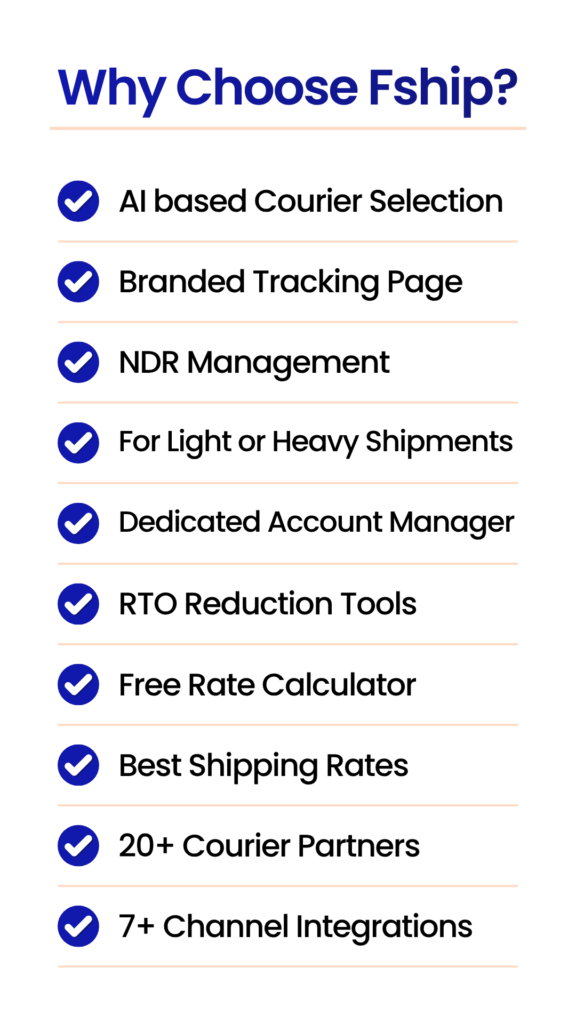
Fship helps ecommerce sellers manage shipping operations through a centralized platform with shipment tracking and delivery management capabilities.
With Fship, sellers can:
- Manage NDR cases: Identify failed delivery attempts and take action to improve delivery success.
- Communicate with customers: Follow up on delivery issues and help customers resolve problems.
- Improve address accuracy: Use custom validation to identify incorrect or incomplete shipment details.
- Manage courier allocation: Select suitable courier partners based on shipment requirements and delivery performance.
By addressing delivery exceptions early and monitoring courier performance, ecommerce businesses can reduce avoidable delivery failures and improve their order fulfilment process.
Final Thoughts
NDR and RTO are connected stages of the ecommerce delivery process. While an NDR gives sellers an opportunity to recover a failed delivery, an unresolved delivery issue can eventually result in an RTO.
By improving address accuracy, confirming COD orders, communicating with customers and monitoring courier performance, ecommerce sellers can reduce avoidable delivery failures and control shipping costs.